Tell us about the job
Takes about a minute. No obligation.
A contractor quoting a water heater installation in Clare County is working out what the household actually demands, not bracing for a climate that punishes equipment constantly. 26 severe weather events were recorded in Clare County, Michigan between 2015 and 2024. At that rate, severe weather is an occasional event, not a standing operating condition, so it does not drive the sizing decision or the choice of components. What drives those decisions is daily hot water load, the condition of existing venting, and how well the original installation was done. A contractor who gets those three right produces an install that performs here.
The ductwork and electrical in older Clare County homes were put in for systems that have since been replaced, often more than once, and each replacement left the infrastructure further from what it was designed to carry. Half the homes in Clare County, Michigan were built in 1976 or earlier (2020-2024 ACS 5-year). A contractor installing a new water heater in a house from that era has to work out whether the existing venting and electrical service will carry what the new unit actually draws, and that assessment happens before any equipment is priced. If the ductwork or panel needs to change, that is where the job's real scope lives.
What a Water Heater Installation Covers
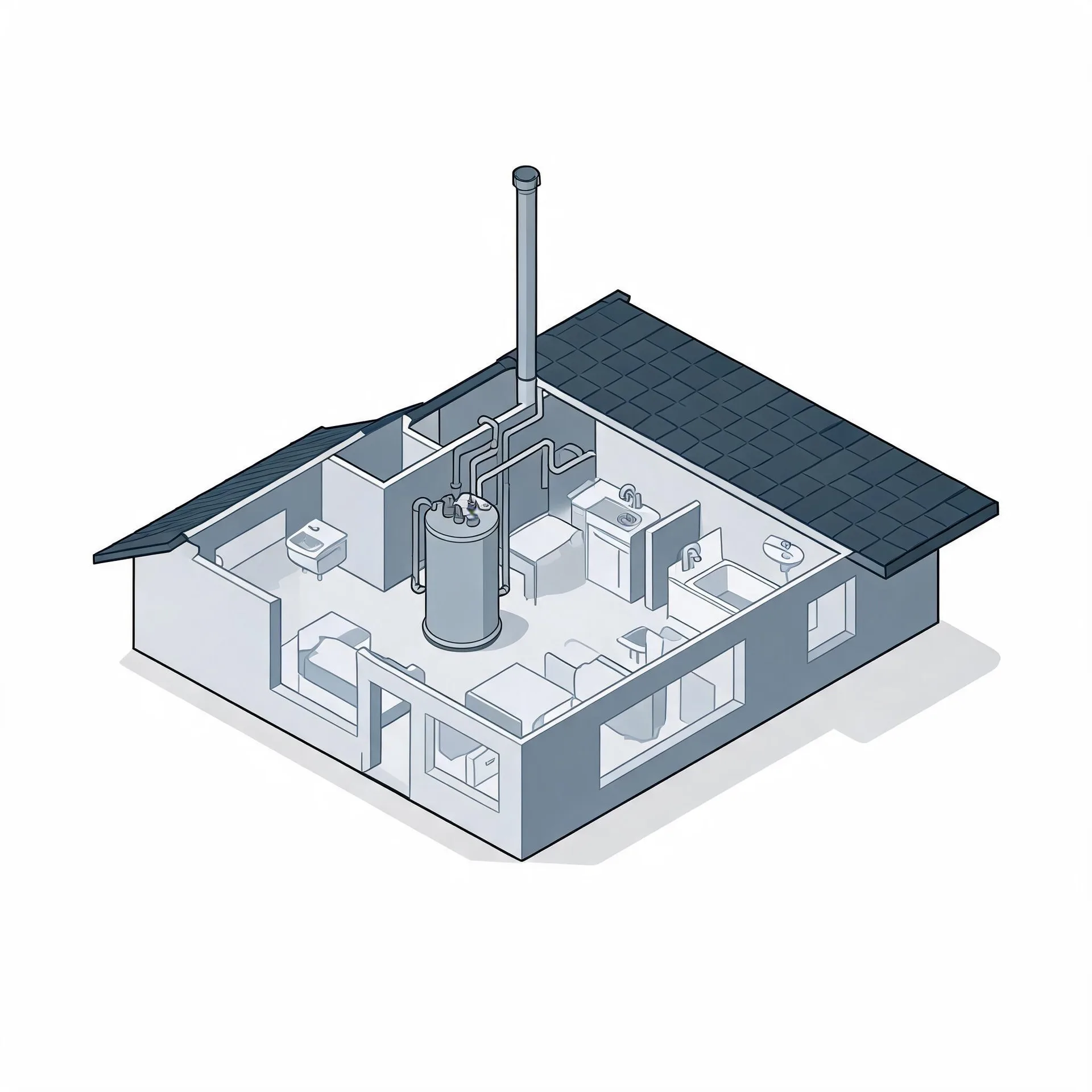
The tank or tankless unit is the centerpiece of the installation, sitting in a utility room, basement, or closet depending on the house. A contractor sets the unit in place, connects it to the cold water supply line coming in and the hot water line running out to fixtures throughout the home.
The pressure relief valve mounts directly on the unit and routes a discharge pipe to a safe drain point nearby. The gas line or electrical supply connects at the unit itself, and an expansion tank often gets added to the cold water side when the house has a closed plumbing system.
The drawing shows a general layout of these components, and a licensed contractor determines exactly what applies to your house.
Find a contractor in Clare CountyClare County, by the numbers
26 severe weather events were recorded in Clare County, Michigan between 2015 and 2024.
NOAA National Centers for Environmental Information, Storm Events Database, bulk CSV export, events 2015-01-01 through 2024-12-31.Half the homes in Clare County, Michigan were built in 1976 or earlier (2020-2024 ACS 5-year).
U.S. Census Bureau, 2020-2024 American Community Survey 5-Year EstimatesClare County, Michigan holds 22,008 housing units (2020-2024 ACS 5-year).
U.S. Census Bureau, 2020-2024 American Community Survey 5-Year EstimatesOwners occupy 86.9% of the occupied homes in Clare County, Michigan (2020-2024 ACS 5-year).
U.S. Census Bureau, 2020-2024 American Community Survey 5-Year EstimatesSevere Weather Events in Clare County, Year by Year
Extreme weather puts real strain on water heating equipment, shortening service life and raising the chance of failure at the worst time. How hard that load hits depends on local conditions, which is why the pattern here in Clare County matters when you're thinking about installation.
26 severe weather events, 2015–2024. Source: NOAA National Centers for Environmental Information, Storm Events Database.