Tell us about the job
Takes about a minute. No obligation.
A contractor called out to repair a water heater in Livingston County has to work out what drove the failure before they can price the fix. 127 severe weather events were recorded in Livingston County, Michigan between 2015 and 2024. At that rate, severe weather is a standing condition of operating here, not an occasional disruption, and its load on a system accumulates. Sediment buildup, pressure fluctuations, and stress on tank seals and relief valves all move faster on a unit that has been working against that kind of environment. Age and installation quality still matter, but a contractor here weighs them alongside a weather record that is already part of the equipment's history.
Water heaters installed in houses of this age are old enough that the repair scope often comes down to a single question: are the parts still being made. Half the homes in Livingston County, Michigan were built in 1991 or earlier (2020-2024 ACS 5-year). A contractor who opens a unit in stock like this finds components that may sit outside what distributors carry on the shelf, which changes how the job is priced and how long it takes. That is a different problem from a failing part in a recent system, where the replacement is a catalog pull.
The Parts of a Water Heater a Contractor Checks During a Repair
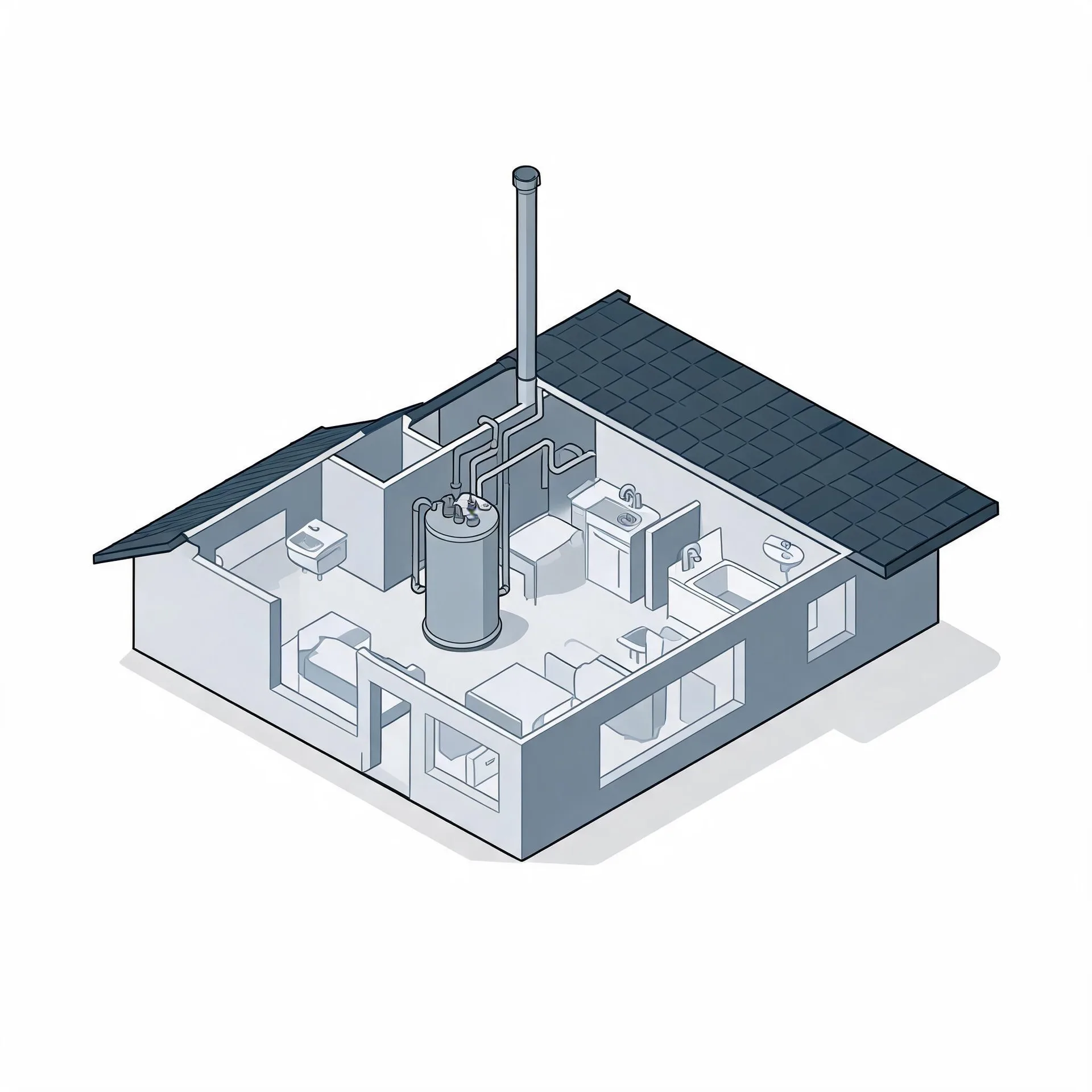
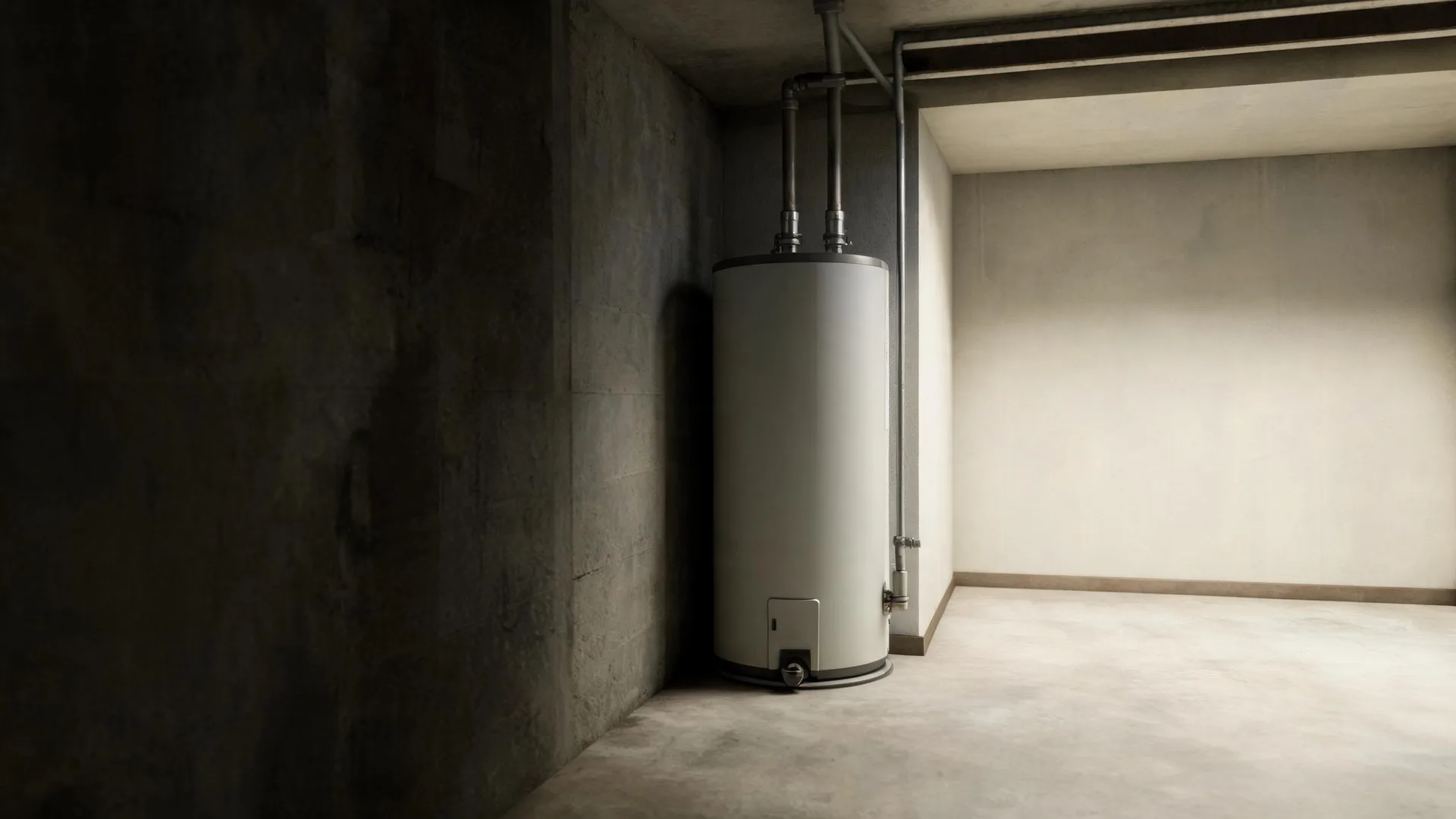
The tank is what most homeowners picture first: a large insulated vessel that sits in a utility room, basement, or closet and holds the home's supply of hot water. Attached to it is the burner assembly or heating element, depending on whether the unit runs on gas or electricity, and that is where a contractor looks when the water stops heating.
The pressure relief valve mounts directly on the tank and releases if internal pressure climbs too high. A gas unit also has a flue that vents combustion gases up and out of the house, and a thermostat controls when and how hard the heat source runs. Any of these can be the source of a problem.
The drawing shows a general layout of a water heater system, and a licensed contractor determines which parts apply and what needs attention in your specific home.
Find a contractor in Livingston CountyLivingston County, by the numbers
127 severe weather events were recorded in Livingston County, Michigan between 2015 and 2024.
NOAA National Centers for Environmental Information, Storm Events Database, bulk CSV export, events 2015-01-01 through 2024-12-31.Half the homes in Livingston County, Michigan were built in 1991 or earlier (2020-2024 ACS 5-year).
U.S. Census Bureau, 2020-2024 American Community Survey 5-Year EstimatesLivingston County, Michigan holds 80,367 housing units (2020-2024 ACS 5-year).
U.S. Census Bureau, 2020-2024 American Community Survey 5-Year EstimatesOwners occupy 86.9% of the occupied homes in Livingston County, Michigan (2020-2024 ACS 5-year).
U.S. Census Bureau, 2020-2024 American Community Survey 5-Year EstimatesSevere Weather Events in Livingston County
Extreme weather puts strain on water heaters, which work harder to recover when temperatures swing hard and fast. How often that happens here shapes how much wear local units accumulate, and what kinds of repairs contractors in Livingston County see most.
127 severe weather events, 2015–2024. Source: NOAA National Centers for Environmental Information, Storm Events Database.